
First things first: You can buy our book at any of these fine retailers RIGHT NOW.
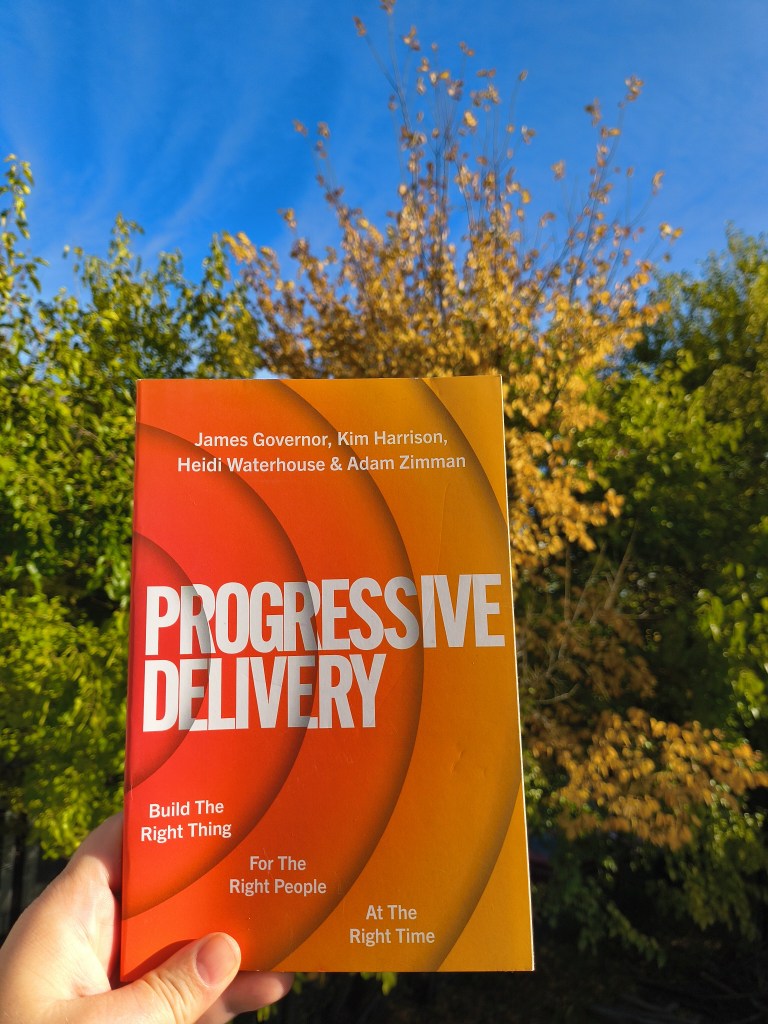
We’ve been working toward this for years and years, so it feels funny to have this one particular day be so significant, but it is. This is the day that all of you get to read about what we’ve been talking about, thinking about, writing about, and practicing. And you’ll get to see how much of it you’re practicing already. It’s probably more than you think.
The liberal birthing book
When we picked the title, Adam’s kid joked that it sounded like the kind of thing a midwife would advocate. This is not entirely wrong. Writing a book is a bit like becoming a parent – there’s an incubation period, where you are working very hard on something but it’s not externalized to the world, and the bit at the end of pregnancy which makes you think that labor and delivery would be better than continuing to do this any longer, and then a moment that seems definitional (that’s launch day) and then so much ongoing work to make your idea into something as it comes into interaction with the world. Three of us are the parents of young adults, and it’s hard not to see it in those terms – you do all this work, and then it turns out there’s more work to do, but it’s all the same job with multiple tasks.
A parent’s best and highest calling is to send into the world a human who is as capable, happy, and undamaged as possible. You start out with a very simple system, with pretty straightforward inputs and outputs. A baby needs food, love, clean diapers, and patience. The system grows in complexity, which challenges you to grow in capacity. Language, emotional regulation, curiousity — these too take patience. There’s a point somewhere around 14 that is no good for anyone, because it’s when a child and parent need to become different, but don’t know how to do it gracefully – and no, it does not help that you have done it with other kids, every one is different. If you’re lucky, everyone makes it to 21 or so still speaking to each other and able to treat each other as adults.
Software development is much the same – there’s the stage where you’re gestating and building it, and it is all internal and not exposed to the vicissitudes of the outside world. But then there is launch day, and the system gets infinitely more complex, because there are users interacting with your baby. And some of them are like my spouse, and love to toss babies in the air. And some of them are the kind of people who are ok with dogs licking the baby’s face. Metaphorically, you understand. Mostly, what happens when software launches is that you find out really quickly that even though you did a ton of research, they will use your software in ways you did not expect, to do things you never even thought of.
Is your software ready for that?
Progressive Delivery
Can you tell what the users are doing? Have you built a software team that can gather information from the users and use it to alter how the software works? Does your team feel safe and supported and do they know what they’re trying to do and do they have the resources to do it?
We built this concept around the four A’s:
Abundance – having enough resources to do things without feeling unduly constrained. This is not unfettered, but the constraints have to be intentional and liberal.
Autonomy – being able to make the changes that are needed, and resist the ones that are not. Autonomy is very much about mutual consent and respect.
Alignment – being part of a team and an organization that has well-defined and meaningful goals, and being able to see the impact and results of those goals
Automation – saving energy to work on the important, interesting problems, instead of rote tasks
The Thesis
In the process of talking about this book, we realized that although the four A’s are part of how we came to the concept “Progressive Delivery”, the thesis is this:
Progressive Delivery is about breaking down the silo wall between software makers and users. Information and consent must flow across that boundary in the same way that it now flows between Dev and Ops.
The user is an essential part of the SDLC, and we now have the tools so that they can tell us what they want, what they need, how they use our software. We owe it to them to listen.
Antithesis
If that’s our thesis, you can see the shape of the antithesis:
- Top-down/imposed
- User as powerless
- “We know what’s best for you”
- Slow/unresponsive
- Limited/miserly
- Status-conscious
Yeah, who wants to be working on that? And yet… and yet…
Remember when your parent got so frustrated about you not putting on your winter coat or answering a question and told you something was going to go that way “because I said so?”. And how this was almost never a sufficient answer, and usually did not solve anything?
As a parent, I’ve certainly felt those words rise up in my mouth. Even though I know it will just mean a tantrum.
Now think about how you felt when Microsoft EOL’d Windows 10, or Apple changed their interface, or when any of your usual tools kept adding AI features back when you turned them off? I felt like I was being treated like a child, for no good reason, because a corporation said so. I threw a tantrum (in adult software terms, this looks like researching Linux distros).
Synthesis
No one can do an instant Progressive Delivery transformation, any more than we can hand the car keys to a 4th grader and ask them to go get milk. But we can all get more progressive, right now. We can give our users real options. We can give our teams more room to experiment. We can articulate what the goals are and why anyone should care.
This book is meant for people who build software, because we are people who build software. We’re talking to ourselves, to you, because this is where we know how to start. There is a shadow book, that we may write someday, about Empowered Acceptance, where we write for users about how to spend their money and their precious time on software and products that see them as partners, not target demographics.
Conclusion
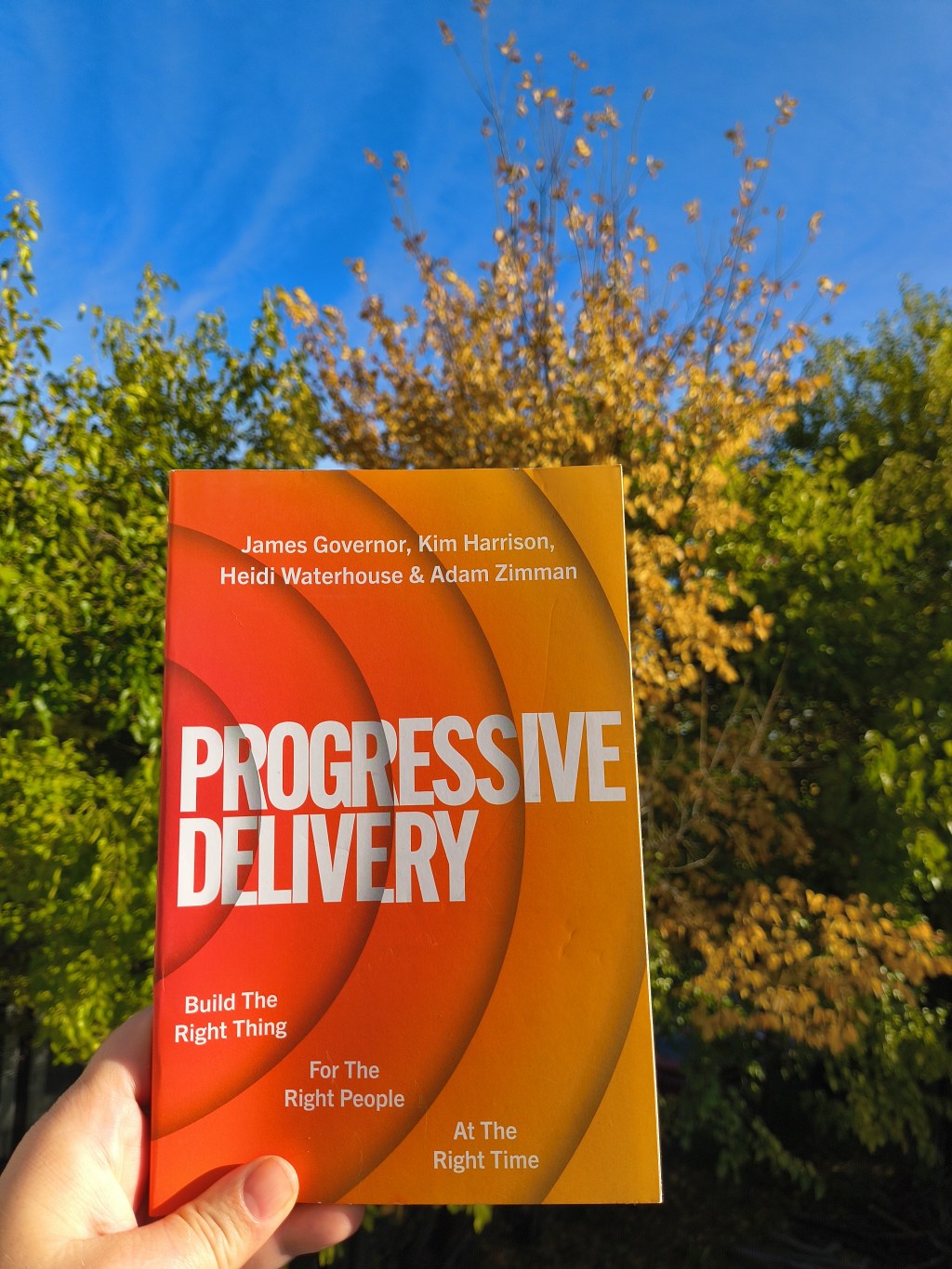
Progressive Delivery is a book that released today, but it’s us catching the wild yeasts of the last few years and cultivating them into wine and sourdough. We don’t know exactly how it will turn out, but we truly believe that our principles are correct, and that this is the way that software is moving, and must continue to move. We are the ones who wrote it down, but you are the ones who will taste it, cultivate it, learn to see it in your world, and expand it in ways we never imagined.
 Progressive Delivery