
Don’t let anyone tell you creative collaboration requires co-presence. Last week was the first time in at least 7 years that all four Progressive Delivery authors were in the same place at the same time. In that time, we identified a pattern happening in the world, named it, honed our understanding, and wrote a whole book about it.
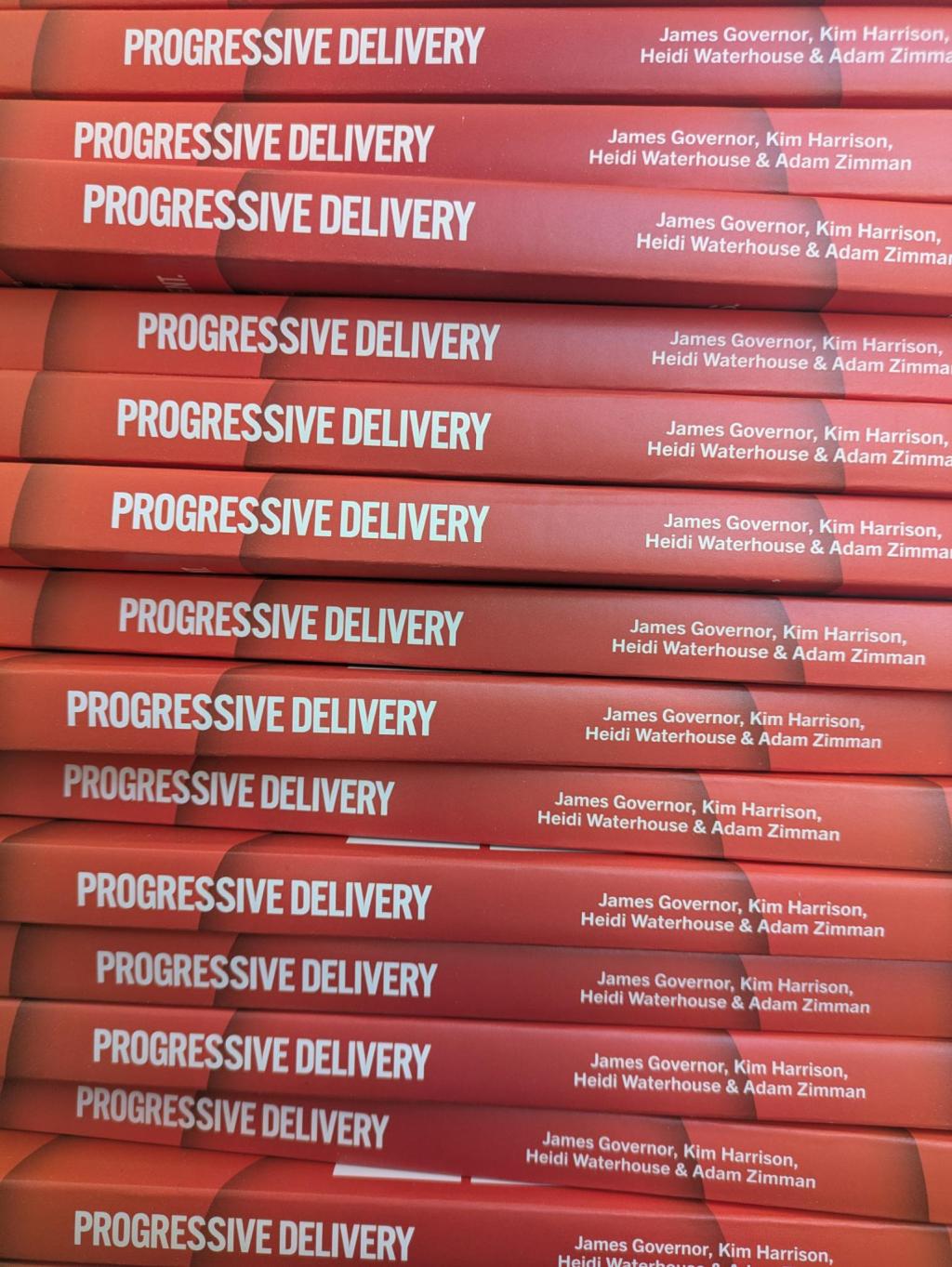
The Progressive Delivery book releases in just under a month (pre-order here), but as we’ve been saying for years, “release” is only one part of the delivery lifecycle. What we did at Monktoberfest was “launch”. We got together, we signed books, we gave them away, we practiced our pitch. We got to see and touch them. Even better, we got to see other people with them!

It was pure delight to hug each other, to eat together, to overlap conversation in a way that’s hard to do on video chat. We got pictures together!
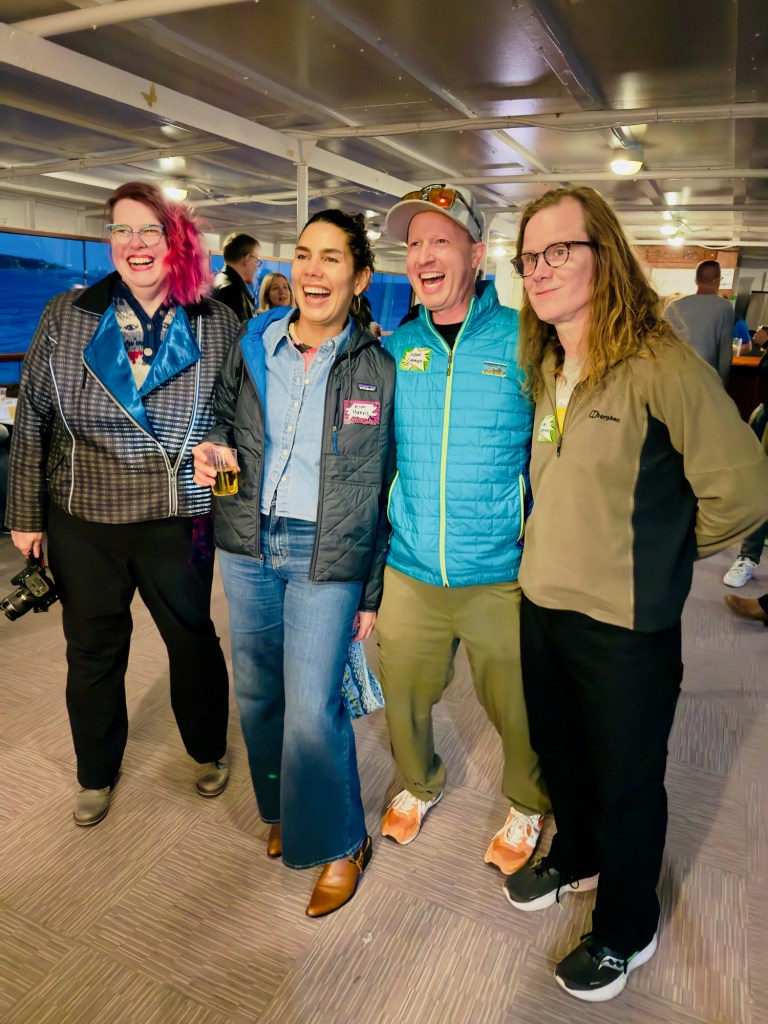
Here we are on boat. Mike Maney took this picture and wrote up a cool post on using AI for alt-text.
And here’s the photo the event photographer took and sent to us, modified by AZ.
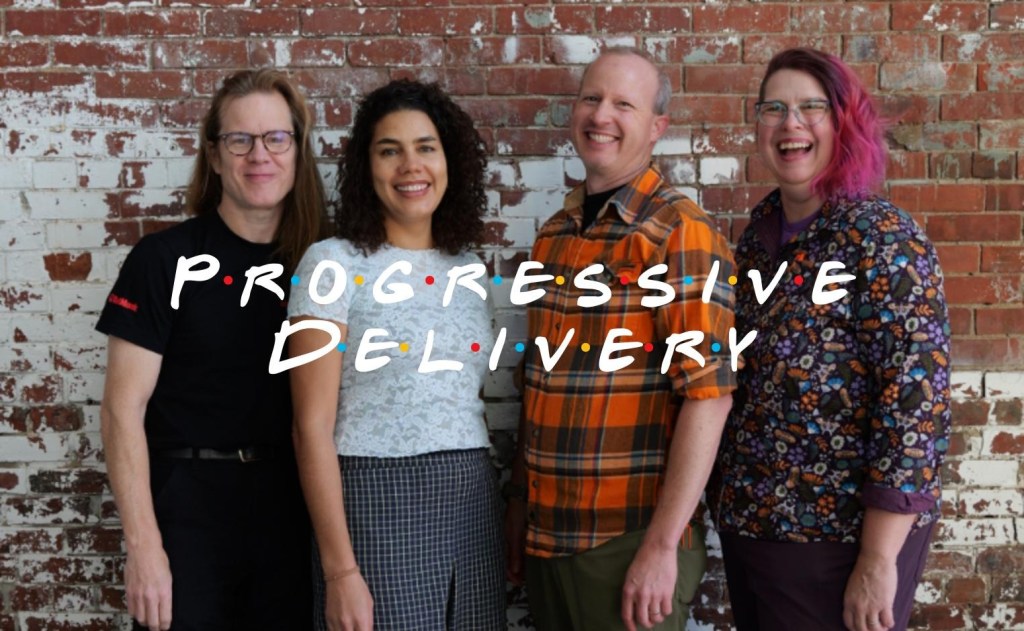
Does this seem like just an excuse for us to be excited about hanging out in person? Ok, yes, a little bit. But I’m going to wrap it up with some of the things that we learned while working together on a team project old enough to have a favorite Pokémon.
What we learned
- Choose your team wisely – you’re going to spend more time with these people than you expect. Make sure you like them.
- Accept that everyone is doing their best, and is also going to fail sometimes. We all sometimes flaked meetings, or didn’t do our homework, or came into the meeting with some very cranky vibes. But overall, we had given ourselves enough time and resilience to hold each other up.
- There’s no “just”. No part of this project was easy for everyone. For instance, I am notably terrible at taking notes. You can’t say “Can you just take a few notes, Heidi?”. I mean you can, but you won’t get meeting notes. Everything mattered, and we sorted out who did what based on the effort for them, not what it would be for some hypothetical ideal person.
- Choose your battles. We like each other, and we generally agree on the things we wanted from the book. But it would have been a super-boring text if we hadn’t had all those meetings where we worked through “what do you mean by that?” and “are you sure that counts?” and “should we have an AI chapter?”. All of us also had to give up some favorite bits that we couldn’t get consensus on. For example, Kim wrote a beautiful piece on fast fashion, and then we ended up using like a single paragraph of it. I did not get to keep the footnote that said (Worms Armaggeddon). But it had to be something we could all be wholehearted about publishing.
- Publishing is the most vibes-based industry since chia pets. We wrote this book specifically for IT Revolution, because they publish the kind of books we want to be shelved next to. Honeycomb calls this “co-opetition”. Everyone has been a dream to work with, and has absolutely strengthened the book you can buy now. That said, all us authors come from a world where you can get instant and granular information on what users are doing. I can see how far down a web page you read, if I want. Meanwhile, book sales can have a lag of many months. You can’t tell how marketing is working at all. MADDENING.
- Release is not the end. Finally: We spend the whole book talking about this. No matter what all the diagrams (currently) say, release is not the endpoint of software development, and it’s not the endpoint of book writing. Instead, the locus of power moves to the reader, the user. How people experience the artifact is what makes it real. And it’s our job as authors to try to get the book (and upcoming podcast) into the hands of our audience. So we’re changing over to that work mode.
 Progressive Delivery